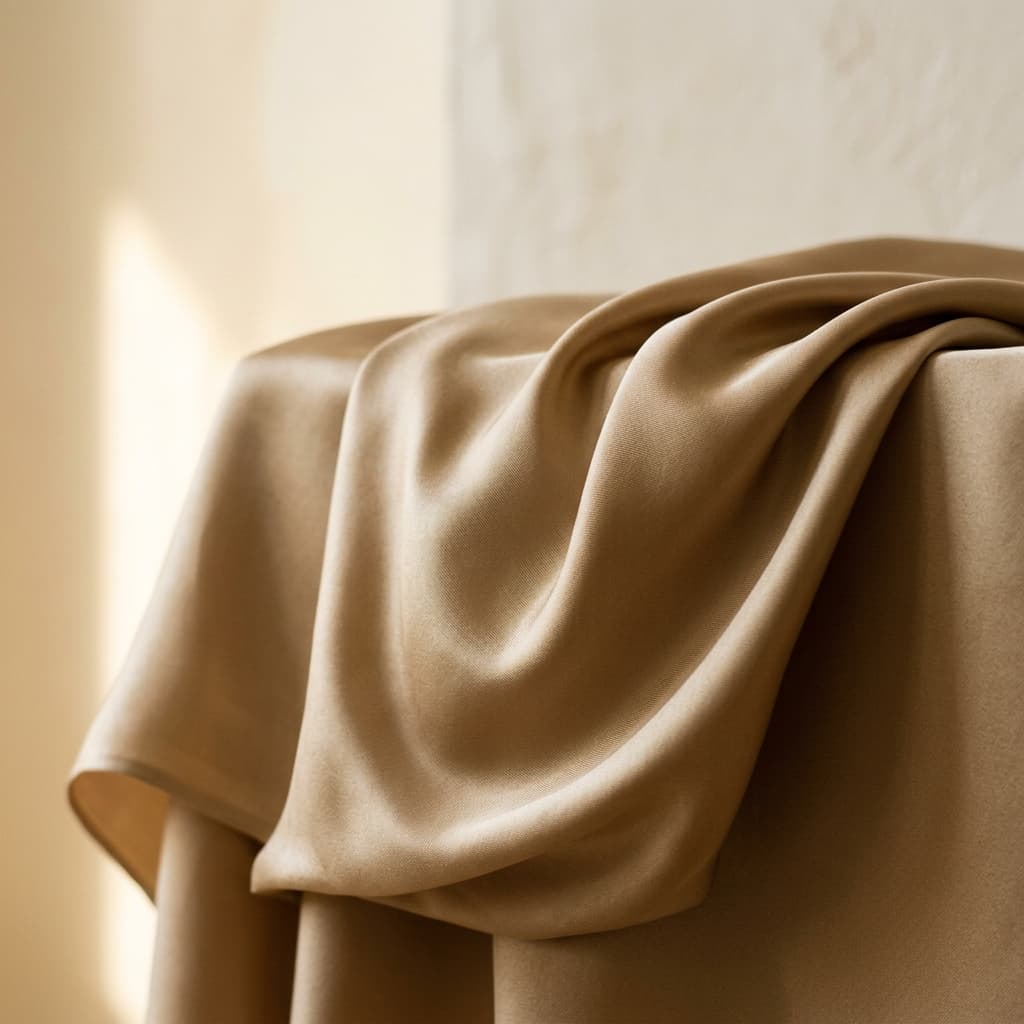
Mulberry Silk
The queen of textiles. Unrivaled luster, fluid drape, and the ultimate canvas for high-definition digital printing.
Silk Mastery
Mulberry Silk: The Pinnacle of Luxury
At VastraaGlobal, we specialize in Grade 6A Mulberry Silk — the finest silk available in the global market. Unlike wild silk (Tussah), which is harvested from various moths, Mulberry silk is produced by the Bombyx mori silkworm, which feeds exclusively on the leaves of the mulberry tree. This controlled diet and environment result in a fiber that is incredibly long, uniform, and pure white.
The "6A" rating is a technical certification that accounts for evenness, cleanness, and tensile strength. For our B2B clients in the luxury evening-wear and scarf sectors, this level of purity is essential. It ensures that when the fabric is passed through our digital printers, the ink penetrates evenly, resulting in a vibrant, consistent color from the first meter to the thousandth.
Understanding "Momme" Weight
Silk weight is measured in "momme" (pronounced moe-me), denoted by 'mm'. One momme is equal to 4.340 grams per square meter. At VastraaGlobal, we stock a range of weights tailored for specific applications:
Ideal for luxury scarves and light blouses. Offers a delicate, ethereal drape.
The industry standard for premium bedding and heavy-weight apparel. Incredibly durable.
Heavy Crepe-de-Chine or Satin. Used for high-end tailoring and bridal couture.
Silk Chiffon. Transparent and fluid, perfect for overlays and multi-layered designs.
Digital Printing on Silk: A Technical Challenge
Silk is a protein fiber, which means it requires a different chemical approach than cellulose fibers like cotton or linen. To print on silk, we use specialized **Reactive Inks**.
The process involves pre-treating the silk with a specific chemical coating that prepares the protein chains to receive the dye. After printing, the silk must be steamed at a precise temperature and pressure. During steaming, the reactive dye forms a covalent bond with the silk fibers, becoming an integral part of the fabric rather than just sitting on the surface.
The result is a print with incredible depth of color and a "soft handle." The natural luster of the silk shines through the print, creating a luminosity that no other fiber can replicate.
Luxury B2B Standards
We offer artisanal hand-finishing for scarf collections.
Precise matching to Pantone® Fashion, Home + Interiors (FHI) system.
Partnerships with cruelty-free "Ahimsa" silk farms available upon request.
Low-energy steaming processes that protect the delicate protein structure.

The Sustainability of Silk
Silk is naturally one of the most sustainable fibers in the world. It is a renewable resource, fully biodegradable, and uses significantly less water than cotton production. At VastraaGlobal, we ensure that our silk sourcing is linked to sustainable forestry, as mulberry trees are excellent carbon sinks.
We also implement a "Zero-Waste" silk program, where off-cuts and spinning waste are collected and processed into recycled silk yarns or used as high-end insulation material, ensuring that nothing from this precious fiber is wasted.